


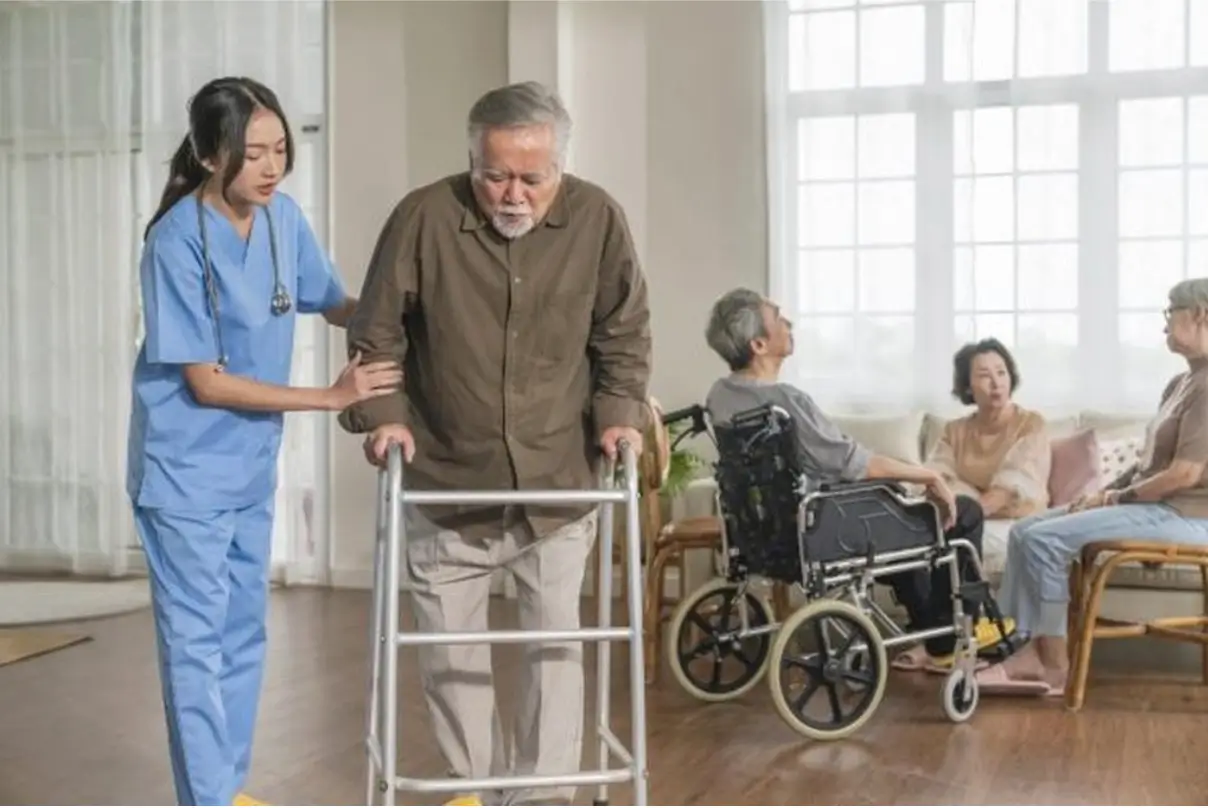
Germany is facing a critical shortage of nursing staff. Hospitals and nursing homes across the country have repeatedly raised alarms about the lack of caregivers. It is estimated that Germany currently requires an additional 150,000 nurses to meet healthcare demand.
The Nursing Workforce Shortage in Germany (2022–2024: Causes & Impacts)
Current Situation: A Severe and Worsening Shortage
In 2023 alone, an average of 35,000 nursing positions nationwide remained unfilled. For every 100 nursing vacancies, there were only 44 job-seeking applicants—meaning more than half of all positions could not be filled. This imbalance places immense pressure on Germany’s healthcare system.
Root Causes of the Shortage
- Population aging: Roughly 22% of residents are over 65. As the elderly population grows, the demand for caregiving rises sharply.
- A retiring workforce: A large share of nurses will retire within the next 5–10 years; nearly 22% of hospital nursing staff are expected to leave the profession within the decade.
- Insufficient new entrants: Too few young people choose nursing. The work is demanding, sick leave is high, and compensation/conditions have not attracted enough newcomers; annual training output lags behind attrition.
- Post-pandemic burnout: Many nurses left the profession during/after COVID-19 and only a small number have returned.
Consequences for the Healthcare System
- Long-term care facilities reduce capacity; some homes in Hamburg closed hundreds of beds in 2024 due to staffing gaps.
- Home-care providers decline new patients because of insufficient staff.
- Overtime, night and weekend shifts increase burnout risk among remaining staff.
- Fewer nurses per patient elevates error risk and strains care quality.
Future Workforce Demand
The shortage is structural and long-term. Official projections indicate Germany needs an additional ~150,000 nurses by 2025 and potentially 500,000–520,000 by 2030. Despite salary and workplace improvements, domestic recruitment alone is insufficient, so international hiring is essential.
Vietnam’s Nursing Workforce Potential (Scale, Age, Training Quality)
A Large and Young Workforce
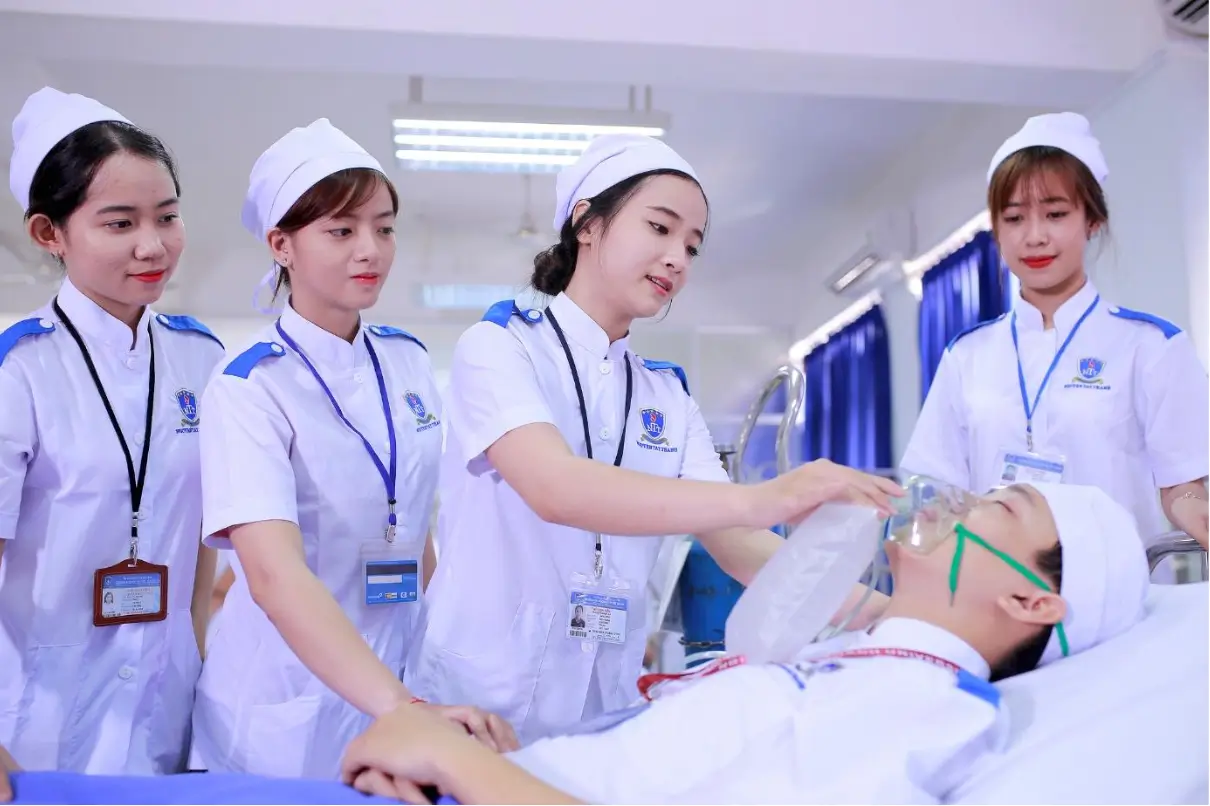
Vietnam has an estimated 140,000–150,000 nurses (14–15 per 10,000 people). While below the OECD average, this represents a substantial, youthful talent pool—largely aged 20–35, adaptable and motivated.
A Rapidly Developing Education System
More than 50 universities and colleges offer nursing programs, producing tens of thousands of graduates annually. Historical data shows as many as 37,000 graduates in a single year, while domestic hiring capacity was only 7,000–8,000, creating a pool available for international placement.
Rising Qualifications & Global Readiness
- ~50% hold a college degree; ~40% hold a university degree; <2% postgraduate (growing).
- Curricula increasingly align with ASEAN/international standards; English and soft skills are included.
Policy Support & Mobility Programs
- Triple Win: MOLISA–GIZ–ZAV cooperation for nursing deployment to Germany.
- Vivantes MOU: examples include full funding to German B2, visa and airfare for selected candidates.
With over 65% of the population in working age and plans to train an additional ~304,000 nurses (2021–2030), Vietnam is well-positioned to supply international healthcare talent.
Why Vietnamese Nurses Fit the German Market
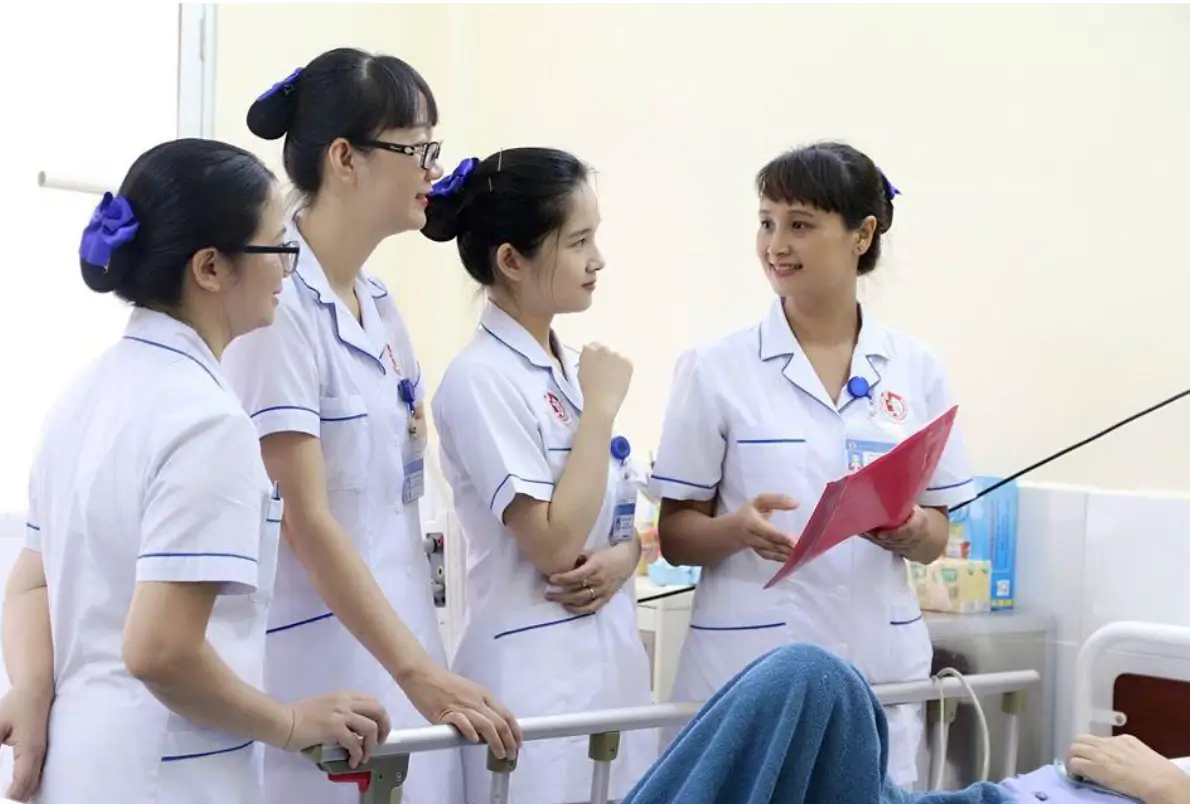
- Technical foundation: Structured training and clinical exposure enable rapid adaptation and successful licensing in Germany.
- Work ethic & compassion: Diligent, patient, and respectful—qualities valued in elder care.
- Mutual economic benefit: German salaries of EUR 3,000–3,500/month are attractive for candidates and sustainable for providers, supporting long-term retention.
- High adaptability: Candidates commit to 6–12 months of intensive German language and cultural preparation; integration continues post-arrival.
BAT Germany’s Mission & Solutions
BAT Germany bridges Germany’s urgent staffing needs with Vietnam’s expanding talent pool. Our mission is to train, qualify, and supply German-standard Vietnamese nurses through an end-to-end, ethical, and compliant process.
1) Rigorous Recruitment
- Multi-step selection emphasizing qualifications, clinical skills, health, ethics, and motivation.
- Sourcing via medical schools, hospitals, and reputable channels.
2) German Language & Integration Training
- Intensive courses to B2 level, including medical terminology.
- Culture and workplace orientation for German healthcare environments.
3) Qualification Recognition & Licensing
- End-to-end support: translation, notarization, submission to authorities.
- Adaptation courses as required; preparation for Kenntnisprüfung.
- Target: 100% achieve German nursing licensure.
4) Reliable Job Placement
- Network of hospitals, nursing homes, and care centers nationwide in Germany.
- Coordinated interviews; transparent, compliant contracts.
5) Relocation & On-the-Ground Support
- Visa, airfare, initial accommodation, airport pickup.
- Assistance with residency, banking, insurance, and early months’ integration.
6) Ethical, Long-Term Tri-party Cooperation
- Compliance with Vietnam–Germany frameworks; transparent candidate communication.
- Partnerships with schools, associations, and public programs (e.g., Triple Win).
Germany vs. Vietnam: A Complementary Match
The two markets are highly complementary: Germany has acute elderly-care demand and insufficient domestic training output; Vietnam has a young, expanding workforce and strong motivation for international careers.
| Indicator | Germany | Vietnam |
|---|---|---|
| Population | ~84 million | ~100 million |
| Share aged 65+ | ~22% | ~8% |
| Nurses (absolute) | ~1.69 million | ~140–150 thousand |
| Nurses per 1,000 people | ~12.2 | ~1.5 |
| Typical nurse salary | ~EUR 3,000–3,500 / month | ~VND 10 million / month (~EUR 400) |
| Market signal | Chronic shortage; strong demand | Large graduate output; mobility potential |
Note: Despite Germany’s higher nurse density, demand still exceeds domestic supply. Vietnam’s growing training capacity provides a sustainable pipeline for international recruitment when paired with proper language and licensing pathways. This is precisely where BAT Germany adds value.
Conclusion & Partnership Invitation
Conclusion
Germany’s nursing shortage presents both challenge and opportunity. With a young, motivated, and increasingly qualified talent pool, Vietnam can be a key part of Germany’s long-term care strategy. BAT Germany serves as the strategic connector—helping German providers secure dependable staff while enabling Vietnamese nurses to build high-quality careers abroad. The outcome is a clear win-win: stable healthcare delivery for Germany and superior professional and economic advancement for Vietnamese nurses.
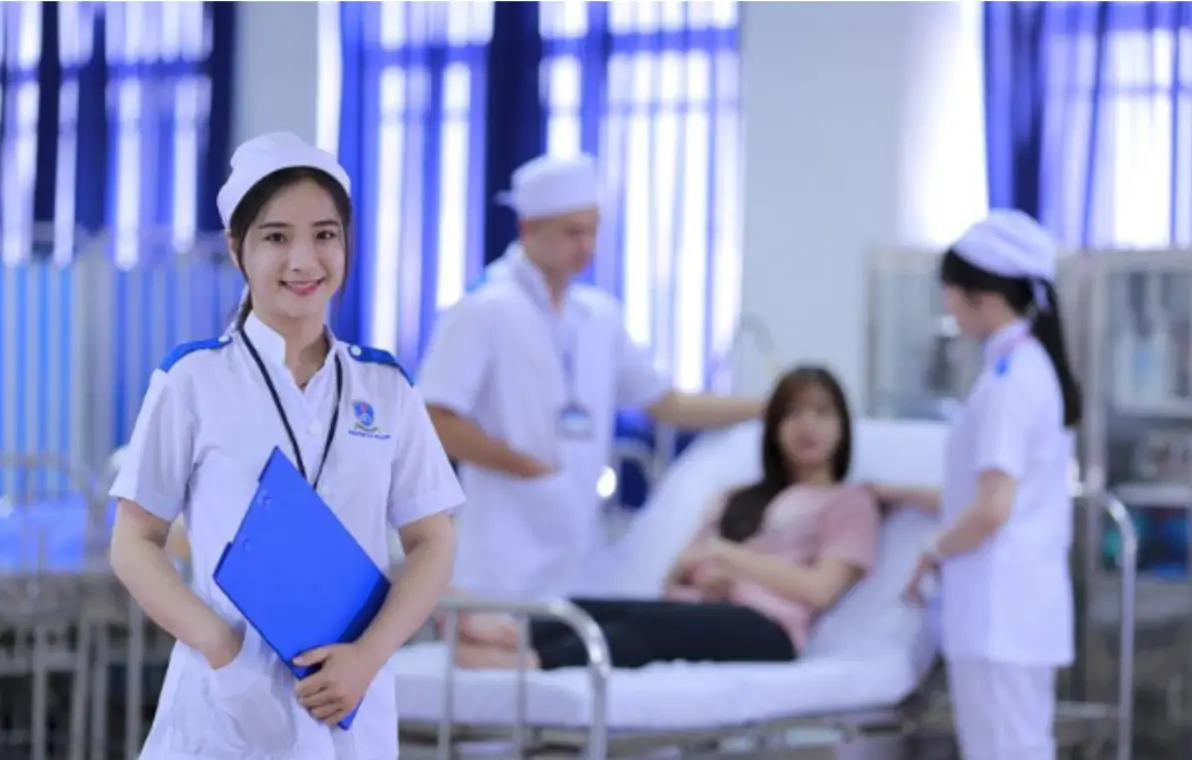
Call for Collaboration
For German partners: Hospitals, nursing homes, and care centers are invited to collaborate with BAT Germany. We supply well-trained, licensed, and motivated Vietnamese nurses prepared for long-term employment and integration.
For Vietnamese candidates: If you are passionate about caregiving and aspire to a career in one of the world’s most advanced healthcare systems, join BAT Germany. We support you from language training and licensing to job placement and successful integration in Germany.
BAT Germany – Connecting Vietnamese Nursing Talent with Germany’s Healthcare Needs.